in the face of contemporary threats


Does critical realism give hope in these difficult times, in which it is a very real prospect that one of the military conflicts will turn into the Third and probably the last World War, the world economy, several times in debt to the global gross product, will finally collapse, bringing misery even to those communities that are still rich today and irretrievably burying all grounds for optimism for those who are tormented by hunger?
Will this orientation rooted in ontological reflection and epistemological humility help in a world where basic ideas and institutions are disintegrating, where individual and collective identities are being destroyed en masse, and where mental illness, neurosis, suicide and crime committed with particular cruelty are spreading epidemically, which since the times of Émile Durkheim has always meant something more than it seems on the surface? But maybe it is precisely the perspective of critical realism that can serve to understand the chances, hopes and great possibilities that, despite all fears, are always probable when it comes to the fate of the human species?
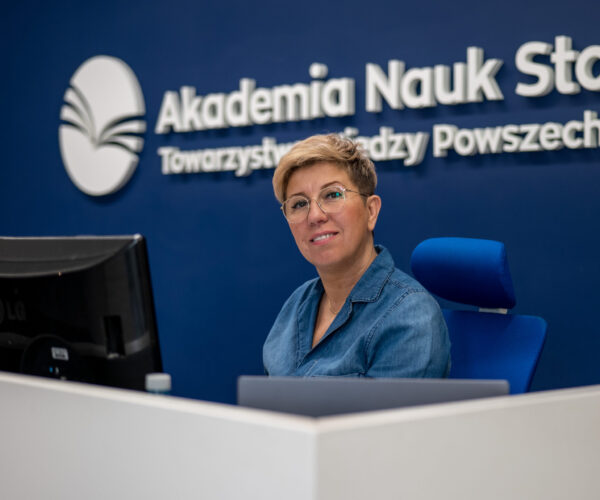
Academy of Applied Sciences TWP in Szczecin
2025 IACR Conference
We live in times of great and profound changes in all dimensions of the human world. Some of them promise much good for people, culture and society, others freeze the blood in the veins of even an averagely intelligent observer, and many of them we are unable to understand and predict their meaning. It seems that in this situation the cognitive framework of critical realism takes on special significance. Can the paradigm developed by Roy Bhaskar and Margaret S. Archer really be a chance to understand the present, and perhaps even the future, related to these civilizational processes, threats and opportunities?
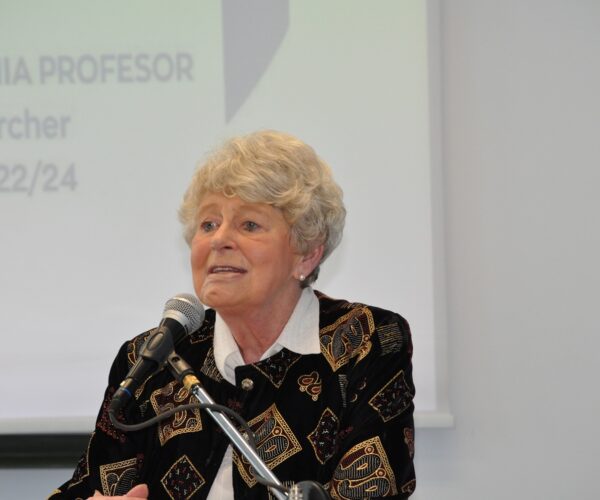
We would like to invite you to talk about these issues during the next Congress of the International Association of Critical Realism, which will be held in Poland again in 2025, this time at the TWP Academy of Applied Sciences in Szczecin, a city located forty minutes by car from Berlin, forty-five minutes by plane from Warsaw, and less than five hundred kilometers from Copenhagen. For several years, the Inter-Faculty Department of Critical Realism has been operating at this university, inaugurated by Margaret S. Archer and Douglas Porpora, with whom many leading scholars associated with critical realism from around the world have been collaborating for a longer or shorter time, and which publishes the Polish Journal of Critical Realism, established under the auspices of Archer and Porpora, the university where the Critical Realism Seminar has been held for several years, bringing together over a hundred scholars from Poland and neighboring countries. We would like to use the
opportunity of the Congress to present Polish and neighbouring countries’ ideas related to realism in general, and critical realism in particular, and to include them in the mainstream of our intellectual movement.
Pre-Conference 28-29.07.2025
Pre-Conference Workshop
The purpose of the Pre-Conference Workshop is to develop participants’ knowledge of critical realism as much as possible over two full days. It is targeted to those who are new to the philosophy or who are wanting to learn more. There will be introductory lectures and discussion sessions on Roy Bhaskar’s first wave, dialectical, and metaReality phases, Margaret Archer’s contribution, developing critical realist-informed social science research methodologies and critical realist academic writing. The workshop offers students an opportunity to present their work in progress for feedback. For students, it is an opportunity to meet peers and develop international and supportive networks. For anyone new to critical realism and IACR conferences, it is an opportunity to go into the conference with new connections and developing friendships.
Register separately to present your ‘work in progress’ research for feedback at the Pre-Conference Workshop
The opportunity to present for feedback is available to online and in-person participants. After enrolling for the Pre-Conference Workshop and paying your registration fee, you will need to separately register to present your ‘work in progress’ research by following this link.
By submitting the form, you will give us essential information about your project, your background and the feedback you seek. NB: The form to register to present at the pre-conference workshop will close on Saturday 12 July at 17:00 (CEST) or earlier if all available feedback slots have been filled.